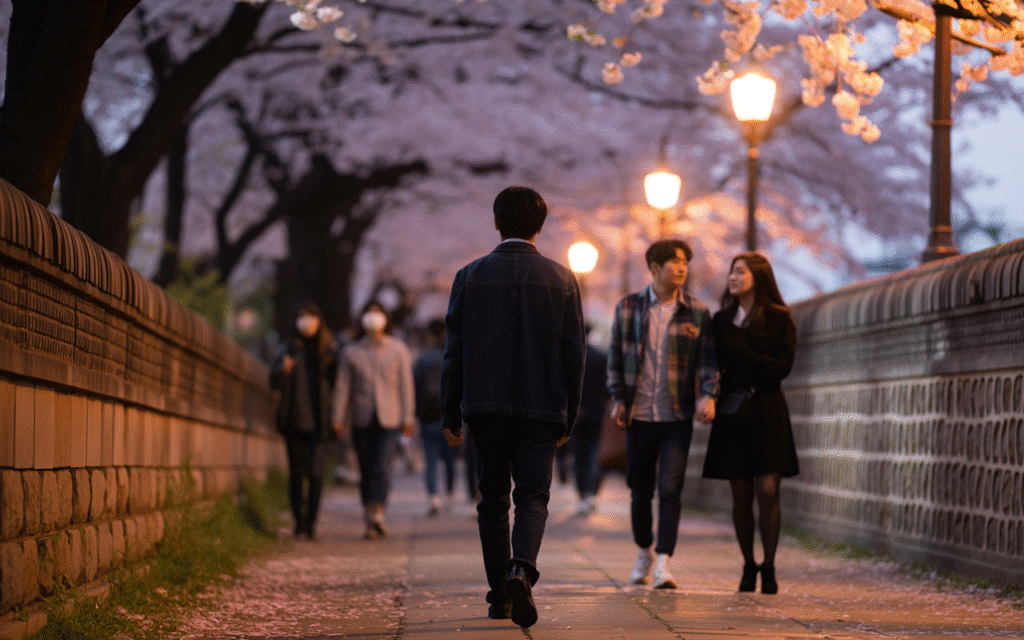
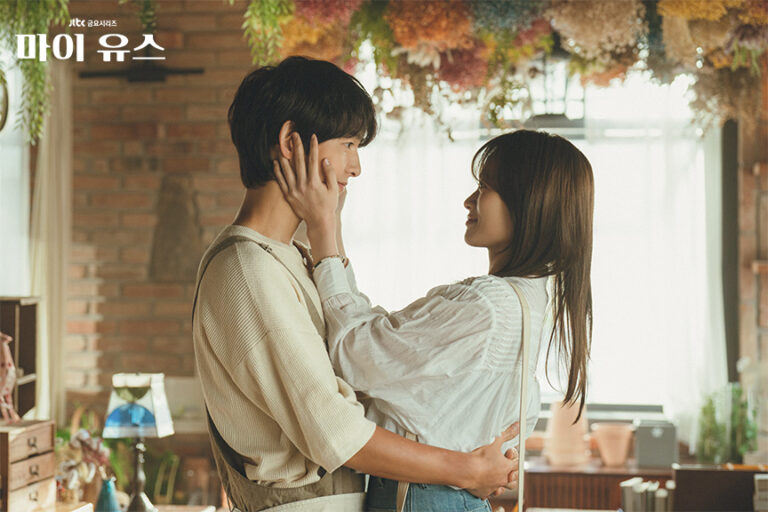
It’s time to share a song that was released just two months ago — a truly fresh gem. It’s part of the OST (Original Sound Track) for the Korean drama My Youth (starring Song Joong Ki and Chun Woo Hee), sung by Korean singer-songwriter Lim Ji Soo. The official English title of this song is “Seam of the Heart”, and its Korean title 수평선 (“horizon”) literally means the line where the sea meets the sky.

Song Snapshot
Artist: Lim Ji Soo (임지수)
Song: Seam of the heart (수평선)
Album: Korean Drama My Youth (마이 유스) OST Part.2
Release Date: September 12, 2025
Composer: Park Sung Il
Lyricist: Seo Dong Sung
Arrangement: Uncle Sam
Language: Korean
Official Audio: Seam of the heart – YouTube / Official MV: 임지수 – 수평선 (마이 유스 OST) [Music Video]
With its gentle, lingering melody and Lim Ji Soo’s restrained yet emotional voice, the song carries a quiet sadness within its calm warmth. While watching My Youth, I felt this song perfectly captured the drama’s tone — the male lead endures a life full of pains and challenges yet continues to love and care for those around him. Just like the characters in the drama, many of us look back on our lives and find both painful moments and memories we still treasure. This song carries a gentle healing power — it brings back warmth and tenderness within our hearts.

Official Music Video of Seam of the Heart
This song tells the story of someone looking back on the brief yet beautiful moments they once shared after their beloved is no longer with them. Through different metaphors, the lyrics express a deep sense of love and longing.
I noticed there aren’t many translations of this song online — perhaps because it’s new, or because My Youth isn’t a widely known drama. On the other hand, its poetic subtlety and the differences in Korean sentence structure make it challenging to translate faithfully.
Lyrics Translation
The following translation is based on my self-studied Korean, reference to Korean dictionaries, some brainstorming with AI, and my own interpretation of the lyrics. I welcome any discussion or corrections.
임지수 – 수평선
Lim Ji Soo – Seam of the heart
이유 모를 떨림
An unexplainable tremble
얕은 설렘
A faint flutter
낯익은 기억의 끝 모서리
At the edge of a familiar memory
Some memories
Some memories
놀란 듯 뛰는 너란 진동
A vibration that is you, making my heart beats as if surprised
찰랑이던 햇살
The shimmering sunlight
푸른 한낮
The blue daytime sky
오려 둔 그날에 멈춘 우리
We stayed frozen on that day, cut out and kept
So beautiful
So beautiful
물끄러미 바라보면
When I gaze at it, lost in thought
Come closer
Come closer
붉은 눈가로
To the reddened edge of the sky
낮과 밤이 잠시 만난
Where day and night meet for a moment—
그때 우리 같아
Just like us back then
잠길 듯
Foam
모른 척 끌어안으면
Holding me like it means nothing
다시 밀려가는
Then drifting away
물거품 같아
Like foam—
우린
That’s us
너일 거란 짐작
I had a feeling it would be you
옅은 미소
A faint smile
지우지 않았던 너란 얼룩
A trace of you I never wiped away
Some memories
Some memories
반가운 듯 기대 보면
When I look back, almost gladly
수평선
The horizon
붉은 눈가로
The reddened edge of the sky
낮과 밤이 잠시 만난
Where day and night meet for a moment—
그때 우리 같아
Just like us back then
잠길 듯
Love
모른 척 끌어안으면
Holding me like it means nothing
다시 밀려가는 사랑 같아
Then drifting away like love—
다시 밀려오는 그리움처럼
Like longing crashing back again,
낮과 밤이 닿은 수평선 같아
Like the horizon where day and night meet—
우린
That’s us
Translation Note 1: Translation of Metaphors and Personification in the Lyrics
In the line “the reddened edge of the sky, where day and night meet for a moment,” after considering the context of the surrounding lyrics, I interpreted the original metaphor as likening the “sky dyed red by the sun” to “reddened corners of the eyes” (I will explain this metaphor in more detail later). The brief moments of sunrise and sunset are the only times when day and night coexist and overlap in the sky. A literal translation as “reddened corners of the eyes” might confuse readers, so I chose the freer translation “reddened edge of the sky.”
Additionally, the phrase “holding me like it means nothing, then drifting away” functions as a modifier for the “foam”. The original text personifies the foam as a lover who comes close and then departs. Therefore, I used “drifting away” instead of “washing away” to preserve the personification.
Translation Notes 2: Using Free Translation Instead of Literal Translation
I used a freer translation approach for certain lines, including:
- “A trace of you I never wiped away” (instead of literally “A stain of you I never erase”)
- “Holding me like it means nothing” (instead of literally “Holding me, pretending not to notice”)
- “The reddened edge of the sky” (instead of literally “Reddened corners of the eyes” )
Reflections
I. Metaphors in the Lyrics
This song uses metaphors to depict the fleeting moments shared between “I” and the beloved, comparing them to the meeting of day and night or to waves that advance and retreat, enhancing the song’s bittersweet beauty.
Pronoun | Tenor (the actual subject) | Vehicle (the metaphor) | Characteristics / Qualities |
We | The beloved and “I” | Day and night | 1. Tenor: Having fleeting moments together. 2. Vehicle: Day and night briefly coexist and intersect at sunrise/sunset. |
We | The beloved and “I” | Foam and “I” | 1. Tenor: Having fleeting moments together. 2. Vehicle: Waves repeatedly crash on “me,” advancing and retreating. |
Love | Waves | 1. Tenor: Love that moves away 2. Vehicle: Waves receding | |
Longing | Waves | 1. Tenor: Sudden surge of longing in the heart 2. Vehicle: Waves rushing in |
II. The Use of “Concrete and Abstract” Imagery in the Lyrics
In Chinese writing, there is a technique called “turning the abstract into the concrete,” which means expressing emotions or intangible ideas through vivid, physical imagery. This approach appears throughout the lyrics and strengthens their emotional impact. Examples include:
- “at the edge of a familiar memory” — turning an abstract memory into a physical object or space
- “the day (we) cut out and kept” — turning memory into a scrapbook clipping
- “love drifting away” and “longing crashing back again” — turning abstract emotion into waves
III. How the lyrics mirror the scenes in My Youth
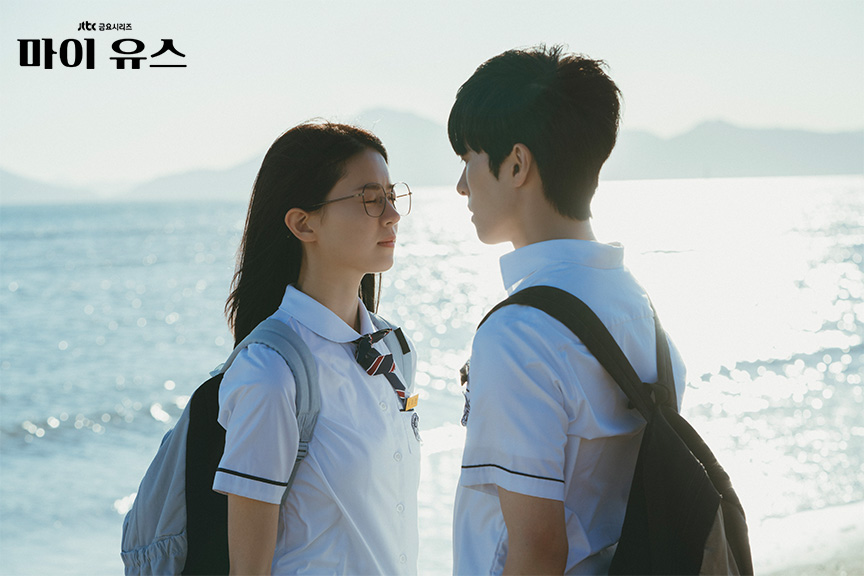
The lyrics paint a vivid picture of sunlight shimmering across the sea in the “my” memories. They also describe the surrounding scenery as “I” recalls their lover—the sky turning red at sunrise or sunset, and the waves rushing in to envelope the body before pulling back again.
Listening to this song evokes the feeling of standing on a beach at dawn or dusk, stepping into the waves, and feeling their flow. In My Youth, the beach holds emotional weight—it contains memories of the characters’ first love and is a place where the male lead recalls his mother. The imagery in Seam of the Heart beautifully mirrors the drama’s important moments. When played as background music alongside the story, the song deepens the audience’s immersion into the characters’ emotional world.
IV. A Personal Reflection: Time with Loved Ones Is Always Fleeting
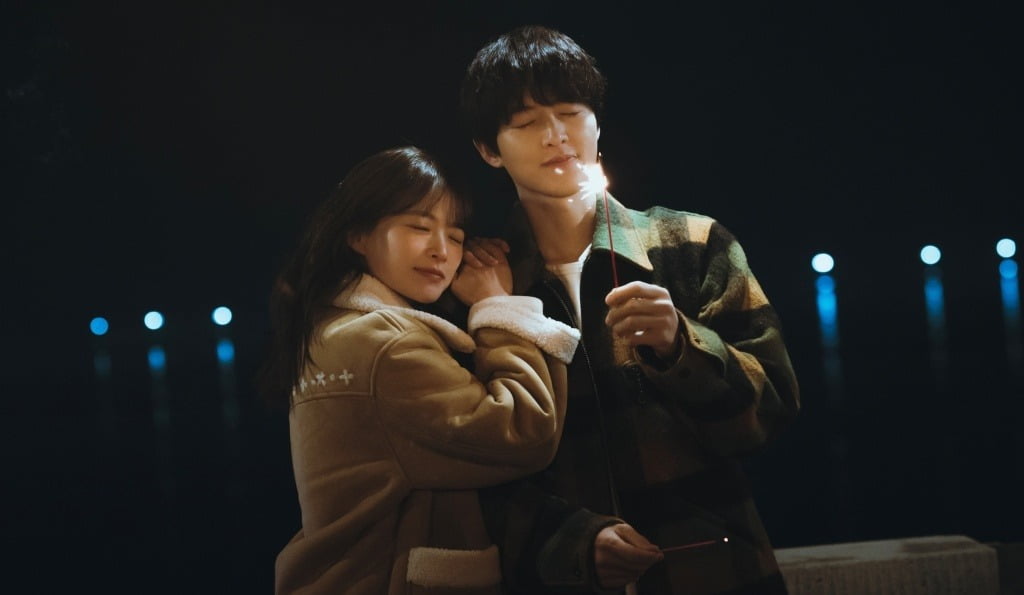
This song reminds me of the family and friends I hold dear. Like everyone, I have experienced separations from those I love. I’ve come to understand that when we are with loved ones, those moments feel peaceful and blissful, almost as if time stands still—so still that one might even feel, “This moment is eternal.” However, separations always come unexpectedly. Time spent with parents, partners, children, or friends is only a fraction of a lifetime. Therefore, it is important to cherish the moments with loved ones and live without regrets.
V. Conclusion: Seam of the Heart and My Youth—Cherishing Love, Anticipating Reunion
In My Youth, although the male lead is not physically present, everyone continues their lives while patiently waiting for his return (the drama does not reveal whether he eventually recovers or returns to Korea in the last episode). Similarly, Seam of the Heart carries a sense of longing and hope for reunion. Just as the sun rises and sets daily and waves retreat only to return moments later, the day of reunion will come. The final line of the lyrics, “(We are) like the horizon where day and night meet”, carries the hope of being together again in the future.
Further Reading: Lim Ji Soo—South Korea’s Rising Soul Music Star
According to the Korean Namu Wiki page (임지수(가수) – 나무위키), Lim Ji Soo, born in 1998, has participated in several Korean singing competitions: Vocal Play (2019, Channel A, winner), Tomorrow’s National Singer (2021, TV Chosun, advanced to the third round), and Sing Again 3 (2023, JTBC, performed as contestant #27, reached the top 10). These do not even include appearances on K Pop Star or Super Star K, which were edited out. Known for her deep, unique tone and powerful, soulful singing, Lim Ji Soo earned consistent praise from the judges. Singer Yoon Jong Shin, a judge on The Unknown Singer 3, commented that Lim Ji Soo is a rare soul singer in Korea today, and she should focus on her genre rather than competing in further contests. This demonstrates that the Korean music industry has high expectations for her future career.
Lim Ji Soo’s performance of the blues song Lucille in Sing Again 3 received unanimous praise from the judges.
Judges’ comments on Lim Ji Soo’s cover of Lucille in Sing Again 3.
Lim Ji Soo’s OST Never Again for the Korean drama Wonderful World also received a positive response.